
 +91 6201533997
 Blogs
What Is Semantic SEO and Why It Matters in 2026
If you have been writing blogs or working on a website, you may have noticed one thing. Ranking on Google is not as easy as before. Earlier, people used to repeat keywords again and again. That worked at that time. But now things have changed.
In 2026, Google understands content in a smarter way. It focuses more on meaning, not just words. That is where Semantic SEO becomes important.
What Is Semantic SEO?
Before going deep, let’s understand what is semantic seo in a simple way.
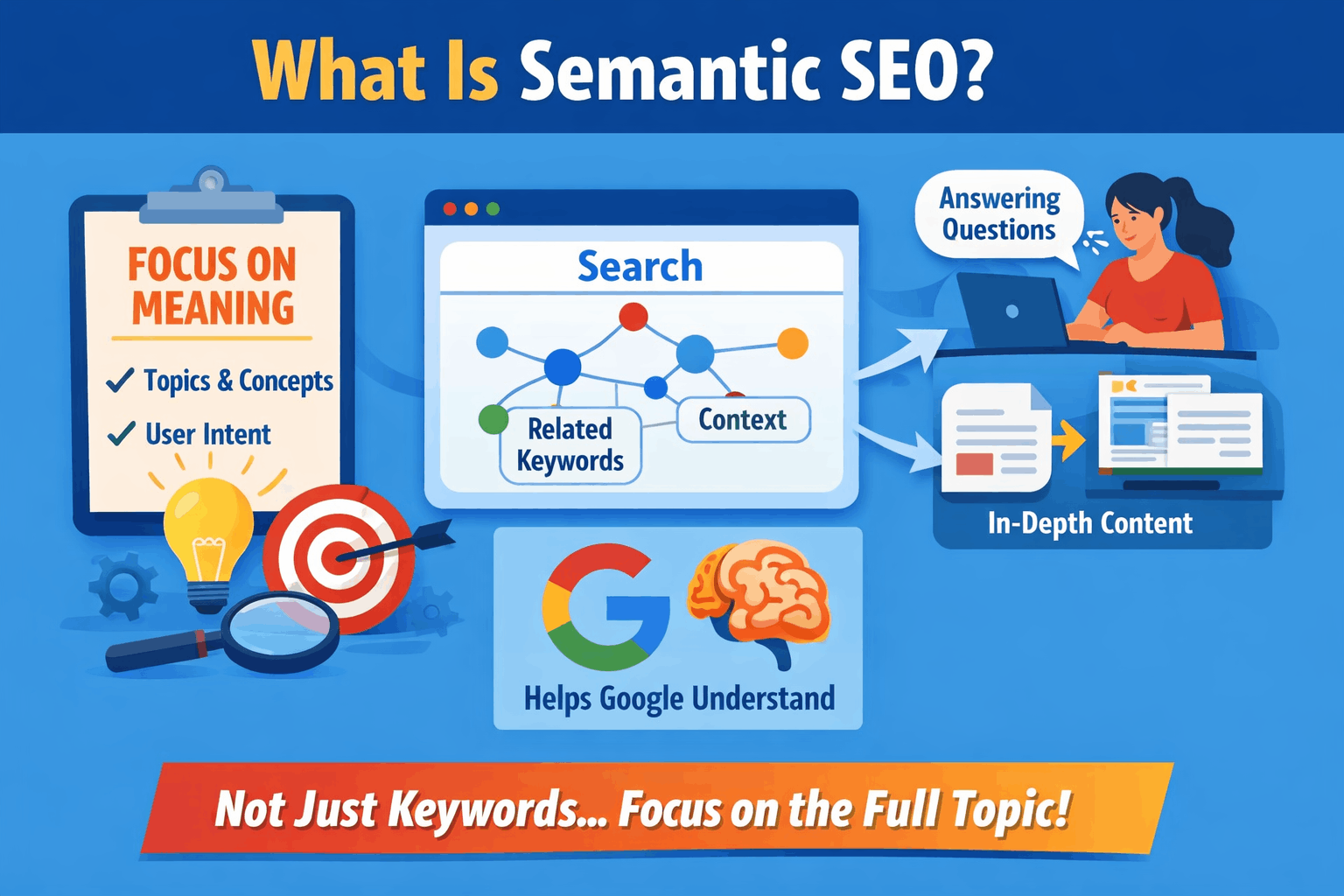
Semantic SEO means writing content that focuses on the meaning of a topic instead of only repeating one keyword. It helps search engines understand what your content is really about.
If someone asks for a semantic seo definition, you can say:
- It is the process of optimizing content using related terms, concepts, and user intent.
The semantic seo meaning is simple. You are not just writing for search engines. You are writing to fully explain a topic so that both users and Google can understand it easily.
Why Semantic SEO Matters in 2026
Search engines are now smarter because of AI updates. They do not just match words. They try to understand what the user wants.
Because of this, Semantic SEO has become very important.
Better understanding of search intent
When a person searches for something, Google tries to understand the real question behind it.
For example:
- “Cheap flights India to Canada.”
- “budget travel to Canada”
Both searches are similar. So, your content should cover the full idea.
Helps you rank for more keywords
When you follow a proper semantic seo strategy, your content does not depend on one keyword.
Instead, it can rank for:
- Similar phrases
- Long-tail keywords
- Question-based searches
This brings more traffic without extra effort.
Improves content quality
Content written with Semantic SEO feels natural.
It:
- Answers real questions
- Explains topics clearly
- Keeps readers engaged
Because of this, people spend more time on your page.
Important for voice search
Voice search is growing fast.
People now search like this:
- “What is semantic seo in simple words?”
When your content is written naturally, it matches these queries better.
Key Parts of Semantic SEO
To understand Semantic SEO, you should know its main parts.
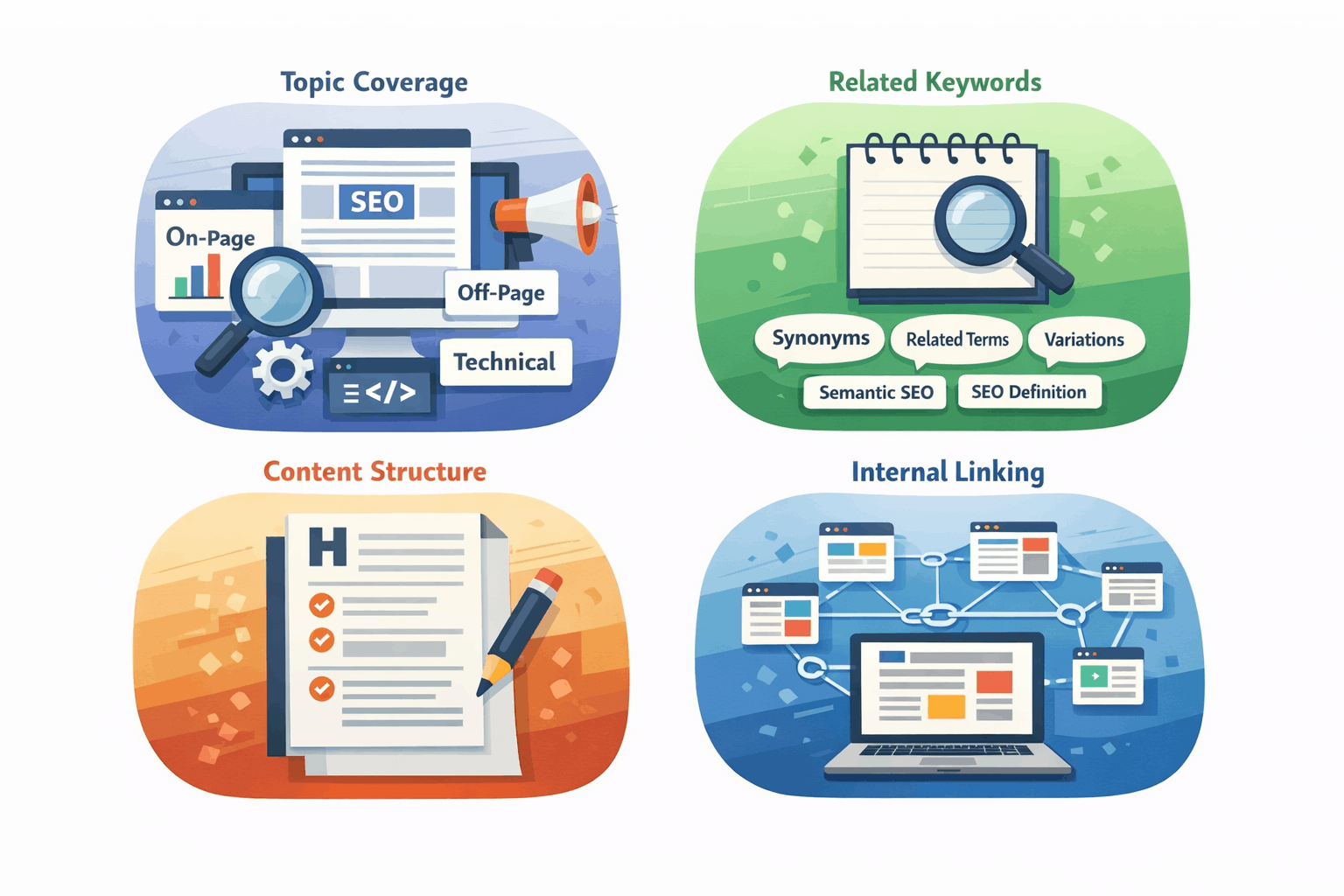
Topic coverage
Do not write only around one keyword. Cover the full topic.
For example:
If your topic is SEO, include:
- On-page SEO
- Off-page SEO
- Technical SEO
Use of related keywords
This is very important.
You should include:
- Synonyms
- Related terms
- Variations
That is why using keywords like:
- semantic seo meaning
- semantic seo definition
helps your content look natural.
Content structure
Keep your content clean and easy to read.
Use:
- Headings
- Bullet points
- Short paragraphs
Internal linking
Link your blog with other related pages. This improves user experience and SEO.
Simple Semantic SEO Strategy
If you are confused about how to start, follow this easy semantic seo strategy.
Step 1: Understand the topic
Do not just pick a keyword. Understand what the user wants.
Step 2: Find related keywords
Use tools or Google suggestions to find:
- Related searches
- Questions
- Variations
Step 3: Write naturally
Do not force keywords.
Write like you explain something to a friend.
Step 4: Answer questions
Add common questions inside your content. This improves your chances of ranking.
Step 5: Cover everything
Do not leave gaps. Try to explain the topic fully in one blog.
Semantic SEO Tools You Can Use
To make your work easier, you can use some semantic seo tools.
Here are a few simple ones:
- Google Search (related searches section)
- Google Keyword Planner
- Ubersuggest
- Answer The Public
- SEMrush
These tools help you find:
- Related keywords
- User queries
- Content ideas
Mistakes to Avoid
Many people still make simple mistakes.
Avoid these:
- Using the same keyword again and again
- Ignoring user intent
- Writing very short content
- Not using related keywords
- Making content hard to read
Future of Semantic SEO
In 2026 and beyond, search engines will become even smarter.
They will focus more on:
- Meaning
- Context
- User satisfaction
So, Semantic SEO is not optional anymore. It is necessary.
For complete Website Analysis, On-Page SEO, Off-Page SEO, and Technical SEO, contact us at Sumit Digitech.
Follow us on Instagram and Facebook for the latest SEO tips and updates.
Conclusion
If you still write content by only repeating keywords, it will not work now.
Start focusing on:
- Meaning
- Topic depth
- User intent
Semantic SEO helps you create better content that ranks and also helps readers.
That is what matters in the long run.
Frequently Asked Questions
Because search engines now understand meaning, not just keywords, it improves ranking and traffic.
It means writing content based on meaning and user intent, not just keywords.
It means writing blogs that explain a topic clearly with context and depth.
It is a method where you cover a topic fully using related keywords and natural language.
Google Search, Ubersuggest, SEMrush, and Answer the Public are commonly used tools.